Traditional Business Loans
Looking for a traditional business loan but not sure what’s available to your business? Read all about them and compare the best interest rates from traditional business lenders here.
- Compare a wide range of lenders and rates
- Check your eligibility in minutes
- Find out how much you could borrow
It's fast, free and won't affect your credit score





- What is a traditional business loan?
- Why compare other lenders beyond your bank?
- How traditional business funding works
- Traditional business funding options
- What can you use traditional business capital for?
- Who can get a traditional commercial loan?
- Benefits of traditional business loans
- Some drawbacks to consider
- Alternatives to traditional business loans
- How to compare traditional business loans
Checking won’t affect your credit score
What is a traditional business loan?
Traditional business loans are fixed-term loans where you borrow a lump sum and make regular monthly repayments, with interest. When you consider a traditional loan, you might think high street banks are the only providers, but that’s not the case.
Non-bank lenders can offer various products specifically suitable for your business needs, and typically have flexible loan requirements and faster approval times.
Why compare other lenders beyond your bank?
Although banks are still a popular lending choice for business owners, there are plenty of other options worth considering (even if it’s just to secure a more competitive interest rate). Non-bank business loans have seen significant growth in recent years and now account for more than 60% of SME lending in the UK.
The traditional bank loan application process can take weeks, and you sometimes need to visit a branch throughout the process. The process includes a lot of paperwork, detailed business plans, strong credit and trading history, and security or personal guarantees. This traditional process puts obstacles in the way of startups with limited trading history or those with bad credit.
Alternative lenders look at your business as a whole instead of just focusing on credit scores or collateral. You can see loan approval in hours, and funds can be in your business bank account in as little as 48 hours.
How traditional business funding works
You apply for a specific amount, and if the lender approves, they transfer the full sum to your business account. You can usually spend this however you see fit (as long as it’s on business-related expenses).
You then repay the loan in fixed monthly instalments, with interest, over a predetermined term, ranging from one to ten years, depending on your circumstances and amount borrowed.
Other things you should know:
- Interest rates vary based on many factors, including credit score, trading history, loan amount, and whether you offer security.
- Secured loans usually come with lower rates than unsecured loans because of the asset risk involved.
- When you apply, you’ll need to provide details about your business, like trading history, how you plan to use the funds, financial statements, etc.
- Some lenders, particularly banks, will want to see comprehensive business plans and forecasts.
- Traditional commercial capital gives business owners predictability in business expenses, as loan terms are fixed, so you will know when the loan will be fully repaid. Which can help you better plan and budget.
Checking won’t affect your credit score
Traditional business funding options
So, what are your options?
Secured business loans
To apply for a secured business loan, you’ll need to have a high-value asset you’re willing to secure the loan with. This might be commercial property, vehicles, or equipment. This considerably lessens the financial risk for the lender, which means you can enjoy lower interest rates, larger loan amounts (up to £2 million or more), and longer repayment terms.
Unsecured business loans
Because you don’t need to risk your asset with an unsecured business loan, they’re quicker to arrange and less risky for the borrower. You can borrow up to £500,000 with this type of loan. Repayment terms are shorter than secured loans, ranging from months to five years.
As you’re not risking an asset, you can expect to pay higher interest rates, and you might need to sign a personal guarantee. A personal guarantee says you’ll take personal liability for the debt should the business become unable to repay.
What can you use traditional business capital for?
You can spend your loan however you want; lenders don’t usually stipulate how you should spend it. As long as your purchases are business-related, then spend away.
Business owners typically use them to:
- Invest in stock or inventory
- Purchase vehicles
- Refit stores or shops
- Hire employees
- Fund marketing or advertising campaigns
- Help them consolidate debt
Who can get a traditional commercial loan?
If you meet the following basic criteria, you can usually apply for traditional business finance:
- Your company is UK-registered
- You’re over 18 years old
- You’ve been trading for at least three months
- You have a UK business bank account
- You can demonstrate your ability to repay (i.e. bank statements)
Benefits of traditional business loans
Here are some benefits of this type of finance.
They give you predictability
As you’re repaying the loan in fixed instalments over a fixed term, you know exactly how much each monthly repayment will be and when it’ll be fully repaid. This can help you budget and plan cash flow more accurately.
You retain control over your business
Traditional business loans are given as a lump sum; there is no need to part with ownership equity like with other finance options (e.g. angel investment). You can spend it how you like and continue making all the business decisions.
You can significantly invest in your business
You can make substantial changes to your business without depleting your own cash reserves in one go. Open a new branch or rebrand your entire business with your new funds and grow quickly.
Checking won’t affect your credit score
Some drawbacks to consider
There are, of course, some downsides to taking on business debt. The biggest one with traditional small business loans is that you must pay your loan repayment every month, regardless of the company's performance. So if you have a dire month, you still must meet your financial obligations.
This isn’t the case with other types of finance, like merchant cash advance or invoice finance.
Alternatives to traditional business loans
If you’re looking for a business finance solution that offers more repayment flexibility or isn’t a typical debt financing solution, there are plenty of other options from non-bank lenders.
- Merchant cash advances. You repay a merchant cash advance as a percentage of your card sales each month. So if you process fewer card purchases than usual, you repay less. This can give you peace of mind when borrowing.
- Asset finance. With asset finance, you can borrow against an existing asset or use the finance to cover asset purchasing or leasing costs over time instead of spending a large portion of your cash reserves up front.
- Lines of credit. A bit like a business overdraft, a line of credit lets you draw down funds as and when you need them. Only pay interest on the money you use. This makes lending very flexible.
- Invoice finance. With invoice finance, you sell one or multiple invoices to the lender, who can immediately release up to 95% of the unpaid invoice amount to your bank account. It’s almost like an advance on your invoice payment, instead of waiting for the full invoice payment term. This means you don’t take on debt at all; instead, the lender subtracts its fees from the outstanding invoice balance before sharing the remainder with you.
How to compare traditional business loans
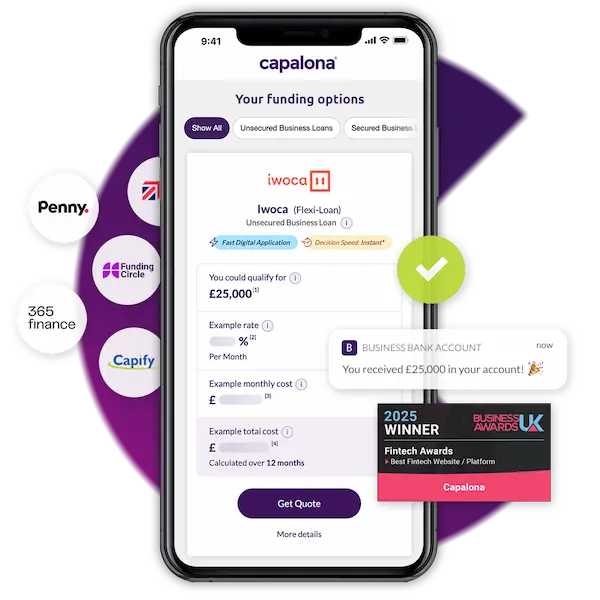
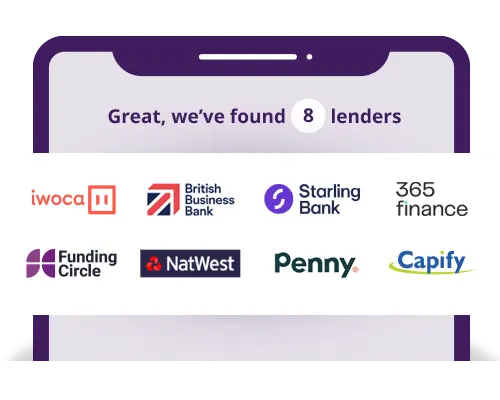
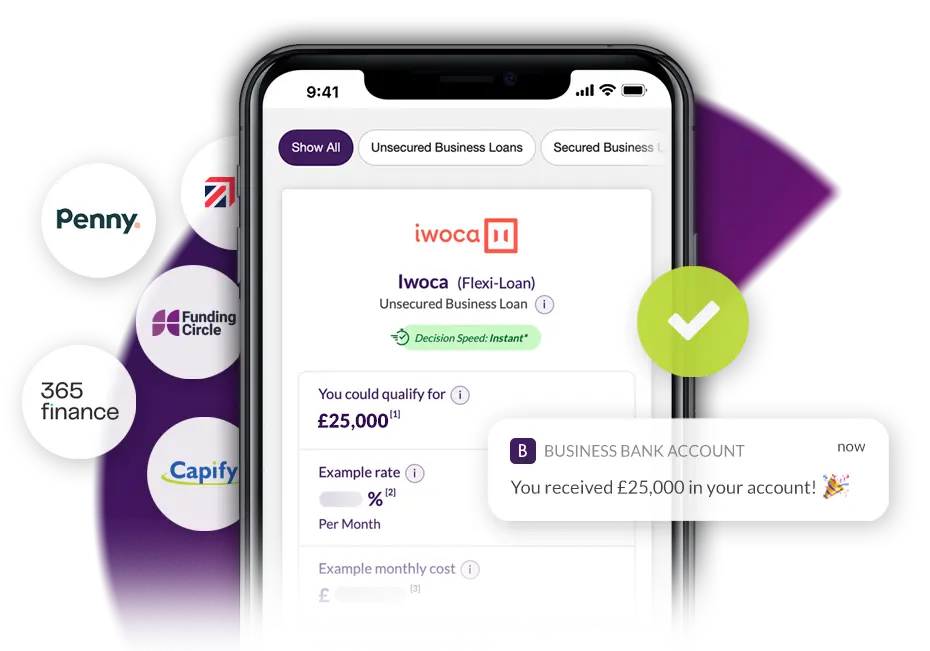
Once you know how much you can afford to repay (you can use our business loan calculator to help you), it’s time to compare lenders and loan costs. A free loan comparison platform like Capalona can give you a pressure-free space to compare multiple eligible loans in one place.
Our tool is self-serve, so you can take all the time in the world to weigh up your options, without any obligation to take the quotes further. Getting a quote won’t affect your credit score.
Compare traditional business loans.
About the author

Adrian T
5/5
Amazingly fast, efficient service, minimal paperwork. So much faster than my business bank of twelve years.


 FAQs
FAQs 0330 223 5036